
Topics
Anxiety Autism Burnout Demand Avoidance EHCPs Low Demand Parenting Mental Health Neurodiversity SEN School Screens Trauma
A podcast where clinical psychologists ask (and answer) questions. Naomi presents with Danielle (Dani) Drinkwater - a Clinical Psychologist, tutor, and author of the Mind the Couch blog.
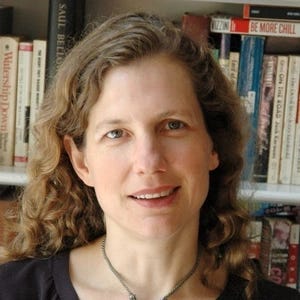
When Katharine Beals’ autistic son was young, she realise that he wasn’t acquiring language as other children were. It wasn’t happening naturally, so she set about deliberately teaching him how to communicate, word by word. From here, she developed a interest in autistic linguistics, as she calls it.
Fast forward to the present, her son is an adult and Katharine is a specialist in autism and language acquisition. And because she understands the process of language acquisition so well, when she heard about facilitated communication she knew it could not be possible. This just wasn’t how language and communication works.
In this fascinating conversation, Katharine tells us why she thinks that the neurodiversity community has not rejected facilitated communication despite the overwhelming evidence that it does not enable independent communication and can cause harm. She tells us about helping her son learn to communicate, and why understanding the intricacies of how autism can affect language acquisition is so important.
Katharine, along with Janyce Boynton (who we interviewed in S2 E10) contributes to a website dedicated to informing people of the harms of facilitated communication, FacilitatedCommunication.org.
Katharine’s own webpage
Link to the University of Pennsylvania’s (not Penn State as Dani had intially thought) Adversarial Collaboration Project.
Are autism and ADHD overdiagnosed? Underdiagnosed? Misdiagnosed? What’s really going on?
The UK government commissioned a report last year to address exactly those issues and it’s finally here. The Fonagy report was published on 9th Oct and spans over 600 pages.
That’s a long document, and there have already been a lot of takes on this report. Some have said that it confirms that overdiagnosis isn’t happening and that this is welcome, while others have framed it as an attack on neurodivergent people. It suggests that we should be moving to a needs-led system, plus diagnosis. What does that really mean?
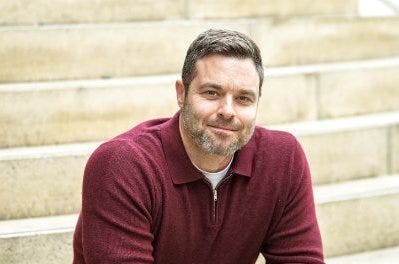
We sat down with James Barnes who luckily for us has put the time into understanding this report to ask him what he thinks, and where we go from here. James wrote a thorough response to the report on his Substack The Between Us which can be read here.
James’s website is here.

Dr Lester Liao is a Developmental Paediatrician at the Montreal Children’s Hospital and Assistant Professor at McGill University, where he is Director of the Formation of the Professional as Healer Course and Creator and Director of the Doctor as Person Fellowship. He is an Associate Member at the Institute of Health Sciences Education.
He is particularly interested in the role of philosophy and culture in shaping the practice of medicine. He has become increasingly concerned about overdiagnosis of autism, and in this interview he explains why. He tells us why he thinks so many children are being diagnosed with autism, and how a diagnosis can harm as well as help.
Lester’s paper on overdiagnosis with Eric Fombonne-
Liao L, & Fombonne E. (2026) Autism Overdiagnosis and Its Harmful Effects. JAMA Pediatr. 180(7):711–712. doi:10.1001/jamapediatrics.2026.0400
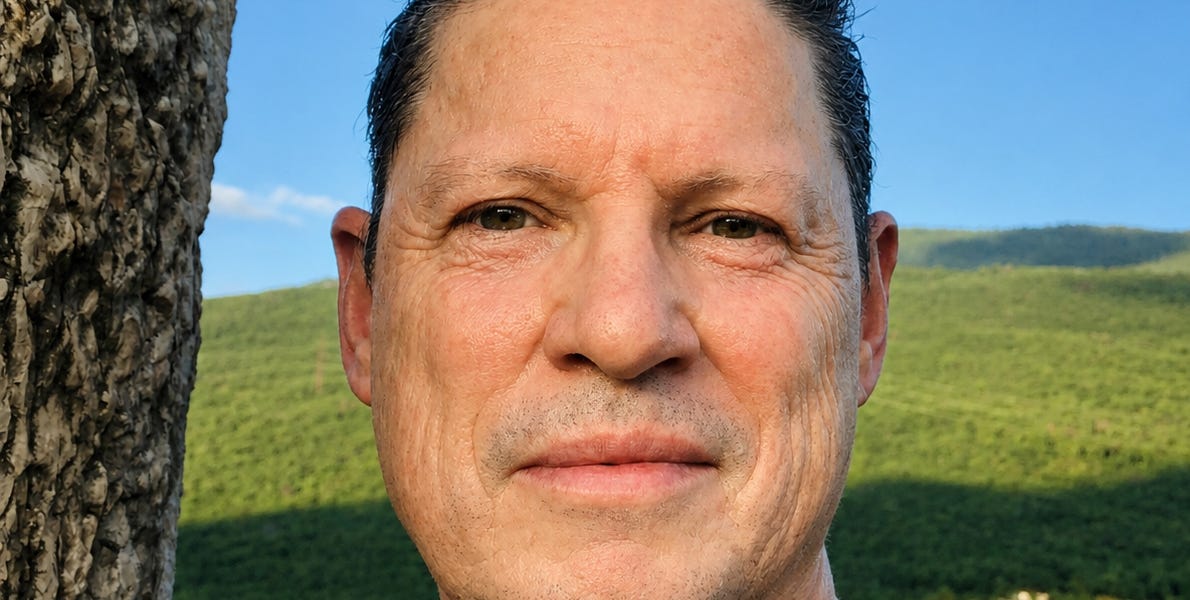
How does the meaning of words change over time - and what are the implications when those words are clinical terms? Nick Haslam is an academic psychologist, and his work has looked at the expansion of psychological terms like ‘trauma’, ‘abuse’ and ‘bullying’. He suggests that these concepts expand over time, becoming both less extreme (vertical expansion) and broader (horizontal expansion).
In this interview, we talk about how that applies to neurodiversity. We discuss how formal terms like ‘ADHD’ have expanded, but also how the emergence of informal terms like neurodivergence have increased the number of people who think that perhaps their difficulties in life are due to their differently wired brains. Nick is at pain to point out noting semantic shifts like this isn’t about judgement, it’s simply an observation. How we use words changes over time - and this has implications for clinical practice.
Nick is a prolific researcher and we have just selected a few, free-to-access examples of his work here.
Here’s a recent paper about concept creep.
Here is some of his work about the mixed blessings of biogenetic explanations.
Article in The Conversation about the way that the conversation on social media has shifted over time, with autism and ADHD now dominating.
Finally, the two papers by Lucy Foulkes and colleagues, mentioned by Dani and Nick, about the prevalence inflation hypothesis, and the Barry Mason paper about Safe Uncertainty.